Interactive Brain Regions
Understanding how ADHD affects different parts of your brain
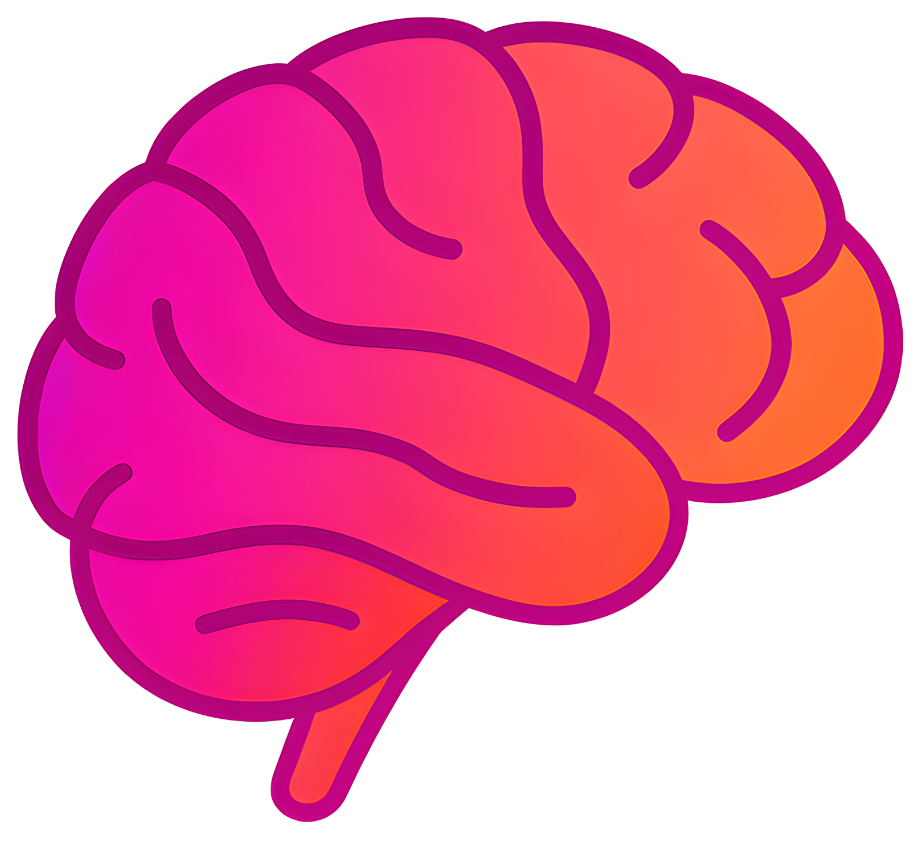
How to Use This Map
Click on the highlighted areas of the brain image above to learn more about how ADHD affects different brain regions. Each colored overlay indicates a clickable hotspot that links to relevant resources and information about that specific brain function.
The pulsing colored boxes show exactly where to click!
Prefrontal Cortex
The Executive Control Center of Your Brain
What It Does
The prefrontal cortex is like the CEO of your brain. It's responsible for executive functions, which are the high-level thinking skills that help you manage your life:
- Planning & Organization: Breaking down big tasks into smaller steps, creating schedules, and organizing your space
- Decision Making: Weighing options and choosing the best course of action
- Impulse Control: Thinking before acting, resisting distractions, and staying on task
- Working Memory: Holding information in your mind while you work with it
- Time Management: Understanding how long tasks take and managing deadlines
- Emotional Regulation: Managing your feelings and reactions appropriately
ADHD Impact
In ADHD brains, the prefrontal cortex develops more slowly—about 2-3 years behind typical development. This means:
- Executive functions may not fully mature until your early 20s (instead of late teens)
- You might struggle more with planning, organization, and time management than your peers
- Impulse control can be challenging, leading to interrupting, blurting out answers, or acting without thinking
- Working memory limitations can make it hard to follow multi-step instructions or remember what you were doing
What This Means for You
The good news: Your prefrontal cortex is still developing! With the right strategies and support, you can strengthen these skills. Many successful people with ADHD have learned to work with their brain's unique wiring.
Practical strategies:
- Use visual planners and checklists to support planning
- Break tasks into smaller, manageable chunks
- Set timers and alarms to help with time awareness
- Create routines to reduce decision fatigue
- Use body doubling (working alongside someone) for accountability
Basal Ganglia
The Focus and Motivation Hub
What It Does
The basal ganglia are deep brain structures that play crucial roles in:
- Attention Regulation: Filtering out distractions and maintaining focus on what's important
- Motor Control: Coordinating movement and controlling fidgeting or restlessness
- Reward Processing: Responding to rewards and motivation, helping you feel satisfied when completing tasks
- Habit Formation: Creating and maintaining routines and automatic behaviors
- Task Initiation: Getting started on activities, even when they're not immediately interesting
ADHD Impact
The basal ganglia rely heavily on dopamine, a neurotransmitter that's often lower in ADHD brains. This affects:
- Focus Challenges: Difficulty sustaining attention, especially on tasks that aren't immediately rewarding
- Hyperfocus: The ability to intensely focus on high-interest activities (this is actually a strength!)
- Motivation Issues: Needing more immediate rewards or consequences to feel motivated
- Restlessness: Feeling the need to move, fidget, or change positions frequently
- Task Switching: Difficulty transitioning between activities
What This Means for You
Understanding your motivation: Your brain needs different types of motivation than neurotypical brains. You might need more frequent rewards, more interesting tasks, or external accountability to stay engaged.
Practical strategies:
- Use the Pomodoro Technique (25 minutes work, 5 minutes break) to maintain focus
- Incorporate movement breaks to satisfy restlessness
- Make tasks more interesting by adding music, gamification, or working in a stimulating environment
- Use body doubling or accountability partners
- Break up boring tasks with more engaging activities
- Leverage your hyperfocus by scheduling important work during times when you can dive deep
Neural Networks
The Communication Pathways of Your Brain
What They Do
Neural networks are the communication highways between different brain regions. Think of them as the internet of your brain—they allow different areas to share information and work together:
- Default Mode Network: Active when you're daydreaming or not focused on a task
- Executive Control Network: Helps you focus, plan, and make decisions
- Salience Network: Determines what's important to pay attention to
- Task-Positive Network: Engages when you're actively working on something
ADHD Impact
In ADHD brains, these networks communicate differently:
- Network Coordination: The networks may not coordinate as smoothly, making it harder to switch between focused work and rest
- Default Mode Intrusion: The daydreaming network may stay active when you're trying to focus, leading to mind-wandering
- Reduced Connectivity: Some pathways may be weaker, affecting how quickly information travels between brain regions
- Different Strengths: Some networks may actually be more active, contributing to creativity and big-picture thinking
What This Means for You
Your unique brain wiring: While ADHD brains have different connectivity patterns, this isn't necessarily a deficit. Many people with ADHD excel at:
- Creative problem-solving and thinking outside the box
- Making unexpected connections between ideas
- Seeing the big picture and understanding complex systems
- Innovation and entrepreneurship
Practical strategies:
- Use mindfulness practices to help regulate network activity
- Create structured routines to support smoother transitions
- Allow time for mind-wandering and creative thinking
- Use external tools (calendars, reminders, lists) to support executive functions
- Embrace your creative strengths and find careers/activities that value them
Amygdala
The Emotional Processing Center
What It Does
The amygdala is your brain's emotional alarm system. It's responsible for:
- Emotional Processing: Recognizing and interpreting emotions in yourself and others
- Stress Response: Activating your fight, flight, or freeze response when you sense danger
- Emotional Memories: Storing memories with strong emotional associations
- Threat Detection: Scanning for potential threats or social rejection
- Empathy: Understanding and responding to others' emotions
ADHD Impact
In ADHD brains, the amygdala can be more reactive, leading to:
- Rejection Sensitive Dysphoria (RSD): Intense emotional pain in response to perceived rejection or criticism
- Emotional Intensity: Feeling emotions more strongly than neurotypical peers
- Mood Swings: Rapid shifts between emotional states
- Anxiety: Higher baseline anxiety due to constant threat scanning
- Emotional Regulation Challenges: Difficulty calming down once emotions are activated
- Empathy Strengths: Many people with ADHD are highly empathetic and attuned to others' emotions
What This Means for You
Your emotional experience is valid: The intensity of your emotions isn't a character flaw—it's how your brain is wired. Understanding this can help you develop better coping strategies.
Practical strategies:
- Practice emotional regulation techniques like deep breathing, grounding exercises, or progressive muscle relaxation
- Create a "cooling off" period before responding to emotional situations
- Build a support network of people who understand your emotional intensity
- Use journaling to process emotions and identify triggers
- Practice self-compassion—your emotions are valid and understandable
- Consider therapy or counseling to develop emotional regulation skills
- Recognize and celebrate your empathy as a strength
Remember: Emotional intensity can also be a superpower. Many people with ADHD are passionate, empathetic, and deeply caring—qualities that make them wonderful friends, partners, and advocates.